
Tomato Puree Making Machine: Smooth Texture with Microcut
How Microcut’s two-stage cutting technology delivers ultra-smooth, consistent tomato paste and puree texture at industrial scale, and where the same platform applies to mango, garlic, and nut butter processing.
Key Takeaways
- A tomato paste making machine equipped with Microcut technology uses precision particle size reduction to deliver ultra-smooth, consistent paste textures at industrial scale.
- Microcut-based continuous food processing equipment reduces manual intervention, improves throughput, and supports a wide range of pastes, purees, and sauces beyond tomatoes.
- The same platform is adaptable across applications including garlic paste making machine configurations, mango puree processing machine setups, and nut butter processing machine use cases.
- Choosing the right paste making machine involves evaluating particle size targets, viscosity range, hygiene design, and process integration capabilities.
Achieving a perfectly smooth tomato paste at industrial scale is far more technically demanding than it appears. A high-performance tomato paste making machine must handle high-viscosity raw material, deliver consistent particle size reduction, and maintain product quality batch after batch. Microcut technology has emerged as a defining advancement in this space, enabling food processors to achieve textures that were previously difficult to replicate at scale.
This blog explores how Microcut-based systems support paste processing goals, what makes them well-suited for industrial applications, and why they matter across a range of food manufacturing contexts.
What Is Microcut Technology and Why Does It Matter for Puree and Paste Production?
Microcut technology refers to a size-reduction approach designed to break down fibrous, pulpy, or chunky raw materials into a uniformly fine paste. Unlike conventional blending or grinding, Microcut is engineered to address the particle size demands of commercial paste and puree production with a focus on output consistency.
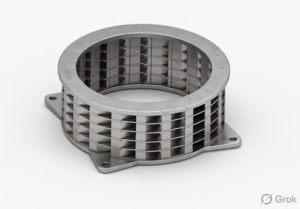
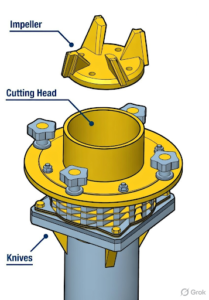
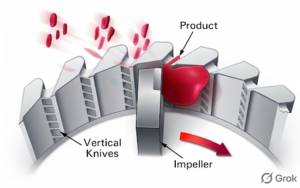
Tomatoes go through a two-stage cutting and puree-making process for high-volume production, passing first through a coarse cutting head and then through a fine cutting head for final finishing.
Coarse Cutting Head
The whole tomatoes are turned into coarse paste by the coarse cutting head at very high volumes of more than 1 ton per hour.
Fine Cutting Head
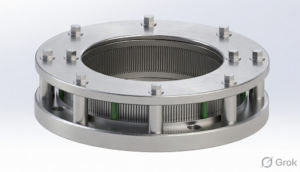
The fine cutting head converts the coarse paste into fine puree for final finishing.
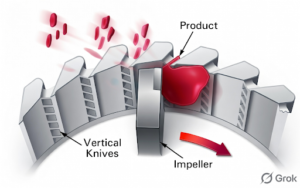
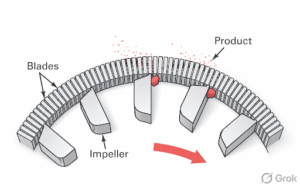
In a standard paste making machine, the challenge is achieving uniformity without overheating the product or compromising flavour and colour. Microcut addresses this by combining size-reduction capability with controlled material handling, producing a smooth, consistent output. For tomato processing, this is critical because tomato solids, skins, and seeds all behave differently under mechanical stress, and the final paste must meet defined texture and viscosity standards.
According to food processing research published by the Food and Agriculture Organization, particle size uniformity in tomato paste directly affects viscosity, mouthfeel, and shelf stability. Microcut technology is designed to address all three of these parameters in a single processing pass.
How a Tomato Paste Making Machine Works with Microcut Integration
A Microcut-integrated tomato paste making machine typically follows a continuous processing workflow. Raw tomatoes are fed into the system, where they undergo initial size reduction followed by precision microcutting. The output is a smooth, homogeneous paste that meets defined particle size specifications.
The particle size reduction machine at the core of this workflow produces output that can be configured to different texture targets depending on the intended product. Finer output produces a silky, seed-free paste suitable for premium sauces and purees. Processing parameters can also be adjusted to retain some texture for products where a more rustic mouthfeel is preferred. This flexibility makes the same machine adaptable for multiple product lines within a single facility.
Integration with downstream equipment such as evaporators, pasteurisers, and filling systems is seamless in modern Microcut-based layouts. The continuous food processing equipment design ensures that material flows without interruption, reducing hold times and the risk of microbial growth in semi-processed product.
Applications Beyond Tomatoes: A Versatile Puree Processing Platform
One of the most significant advantages of a Microcut-based system is its versatility across a broad range of raw materials. The same engineering principles that make it effective for tomatoes also apply to other fibrous and high-moisture food inputs.
A mango puree processing machine configuration benefits from Microcut because mango flesh contains fibrous strands that conventional blenders struggle to break down completely. Microcut delivers a smooth, fibre-free puree that meets the texture standards required by beverage and confectionery manufacturers. Similarly, a garlic paste making machine setup using Microcut achieves a fine, uniform consistency that is difficult to replicate with coarser grinding equipment.
For producers of nut-based products, the same platform functions effectively as a nut butter processing machine, handling the high-fat, low-moisture matrix of nuts while delivering a smooth spreadable texture. The puree processing machine architecture also supports stone fruits, ginger, chilli, and a wide range of other inputs that food manufacturers process at scale.
Tomato Paste
Fine seed-free texture, high viscosity output.
Mango Puree
Smooth, fibre-free consistency for beverages and fillings.
Garlic Paste
Uniform fine paste for flavour concentrates and condiments.
Nut Butters
Smooth spreadable texture from high-fat raw materials.
Chilli and Ginger Paste
Controlled particle size for spice pastes and marinades.
Industrial Tomato Processing Equipment: Key Features to Evaluate
When selecting industrial tomato processing equipment for a paste production line, several technical parameters determine whether a machine will perform reliably at scale. Buyers need to look beyond headline throughput figures and evaluate the engineering details that govern long-term performance.
Hygienic design is non-negotiable for any food processing machine for paste. Surfaces in contact with product must be made from food-grade stainless steel, with minimal crevices where product can accumulate. Clean-in-place (CIP) capability is increasingly expected in modern facilities because manual cleaning of high-viscosity paste residues is both time-intensive and inconsistent. A machine that supports automated cleaning reduces downtime and lowers microbial risk between production runs.
Viscosity handling is another key parameter. Tomato paste at high Brix levels becomes extremely thick, and the sauce making machine or paste line must be capable of pumping and processing material at these viscosities without cavitation or mechanical strain. Variable speed drives and pressure monitoring systems are standard features in well-engineered systems. Thermal management, whether through jacketed bodies or indirect heating, ensures that sensitive colour and flavour compounds are preserved during processing.
Food-Grade Construction
Stainless steel throughout all product-contact surfaces.
CIP-Ready Design
Automated, consistent cleaning between production runs.
Variable Speed Controls
Speed and pressure controls for viscosity management.
Jacketed Bodies
Temperature control during paste production.
Modular Integration
Compatible with evaporators, fillers, and pasteurisers.
Prócer Microcut: Precision Engineering for Paste and Puree Processing
Prócer, a brand under Kinemach, designs and manufactures industrial processing equipment for food, pharmaceutical, cosmetics, and chemical applications. The Microcut is part of Prócer’s processing equipment portfolio, developed to address the size-reduction needs of paste and puree manufacturers across a wide range of raw materials and output specifications.
The Microcut sits within a broader ecosystem of processing solutions that includes the MixPro, a vacuum processing and high-shear mixing system capable of handling viscosities up to 100,000 cP, as detailed in our MixPro technical review. This makes Prócer’s equipment portfolio well-suited for manufacturers who need both precision size reduction and advanced mixing in their paste production lines, including adjacent chemical and pharmaceutical paste applications that share the same fibrous-material handling challenge.
Prócer’s Universal Cooker further complements the Microcut in integrated food processing lines, offering cooking, mixing, and cooling in a single unit across capacities from 5L to 300L. The NucleoLab lab-scale unit allows R&D teams to trial new paste formulations before committing to full production equipment. Together, these systems support manufacturers from pilot-scale development through to full commercial production at the Kinemach Engineering facility in India.
For high-throughput lines requiring powder or stabiliser incorporation alongside the puree stage, the HFD powder dispersion system and Nexus inline homogenizer integrate directly with the Microcut platform. Food manufacturers looking to explore Microcut capabilities can contact Prócer directly, view the full product range, or browse the industries page for food processing application notes.
Conclusion
A well-specified tomato paste making machine built around Microcut technology delivers more than smooth texture. It provides consistency across batches, flexibility across product types, and the hygienic design that modern food manufacturing demands. Whether the application is tomato paste, mango puree, garlic paste, or nut butter, the underlying principles of controlled particle size reduction remain the same. Prócer’s processing equipment portfolio offers food manufacturers a reliable foundation for building efficient, high-output paste and puree lines. Contact the Prócer team to learn how Microcut and complementary systems can support your processing goals.
Frequently Asked Questions
Ready to Upgrade Your Paste or Puree Line?
Speak with Prócer’s engineering team about your raw material, texture targets, and throughput requirements.